Change or rekey · Toronto
Deadbolt Installation
The old deadbolt has grown lazy. You turn the thumb-turn and the bolt creeps out halfway, then needs a second push with the door pulled tight.
Call now · open 24/7(289) 806-4961In plain words
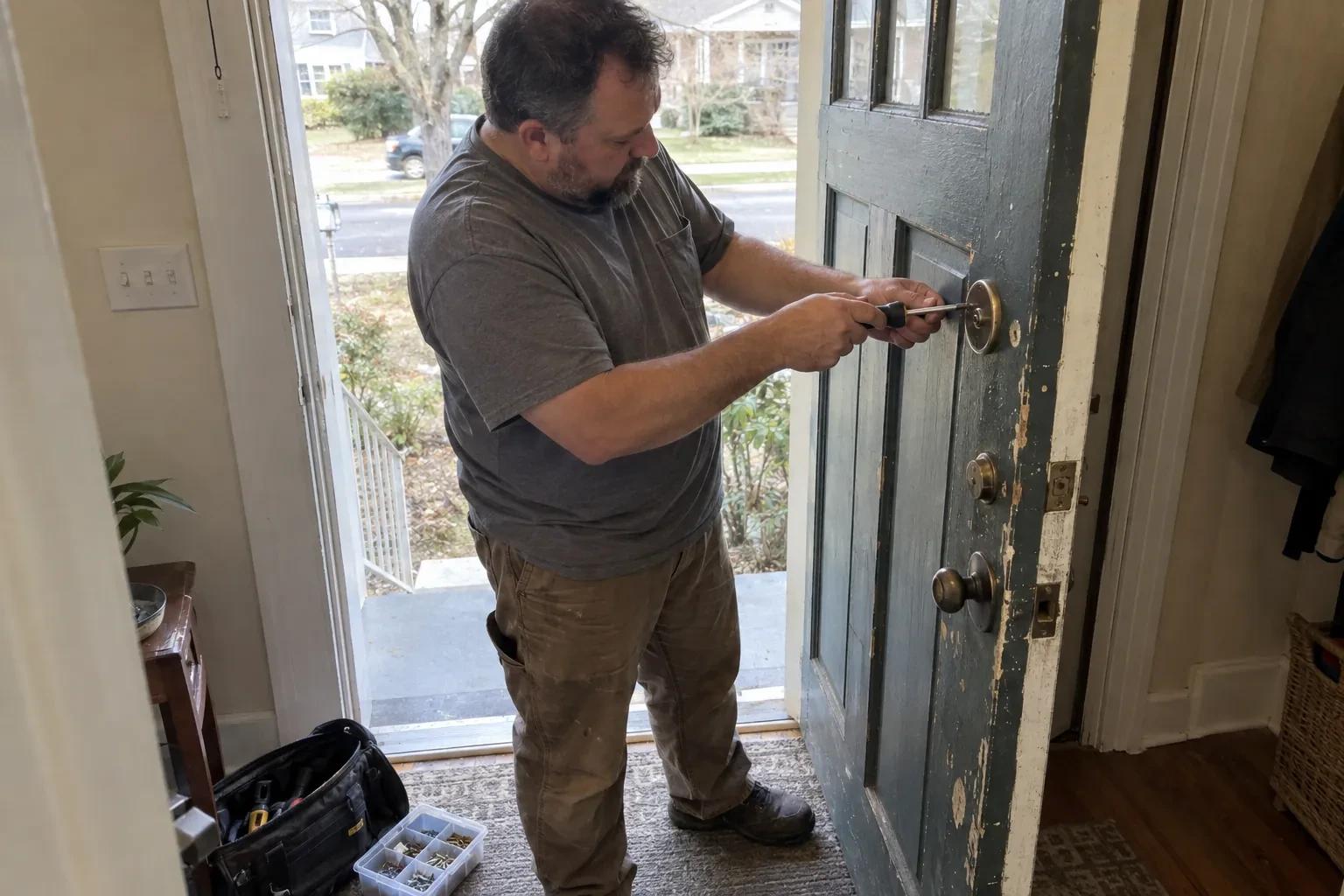
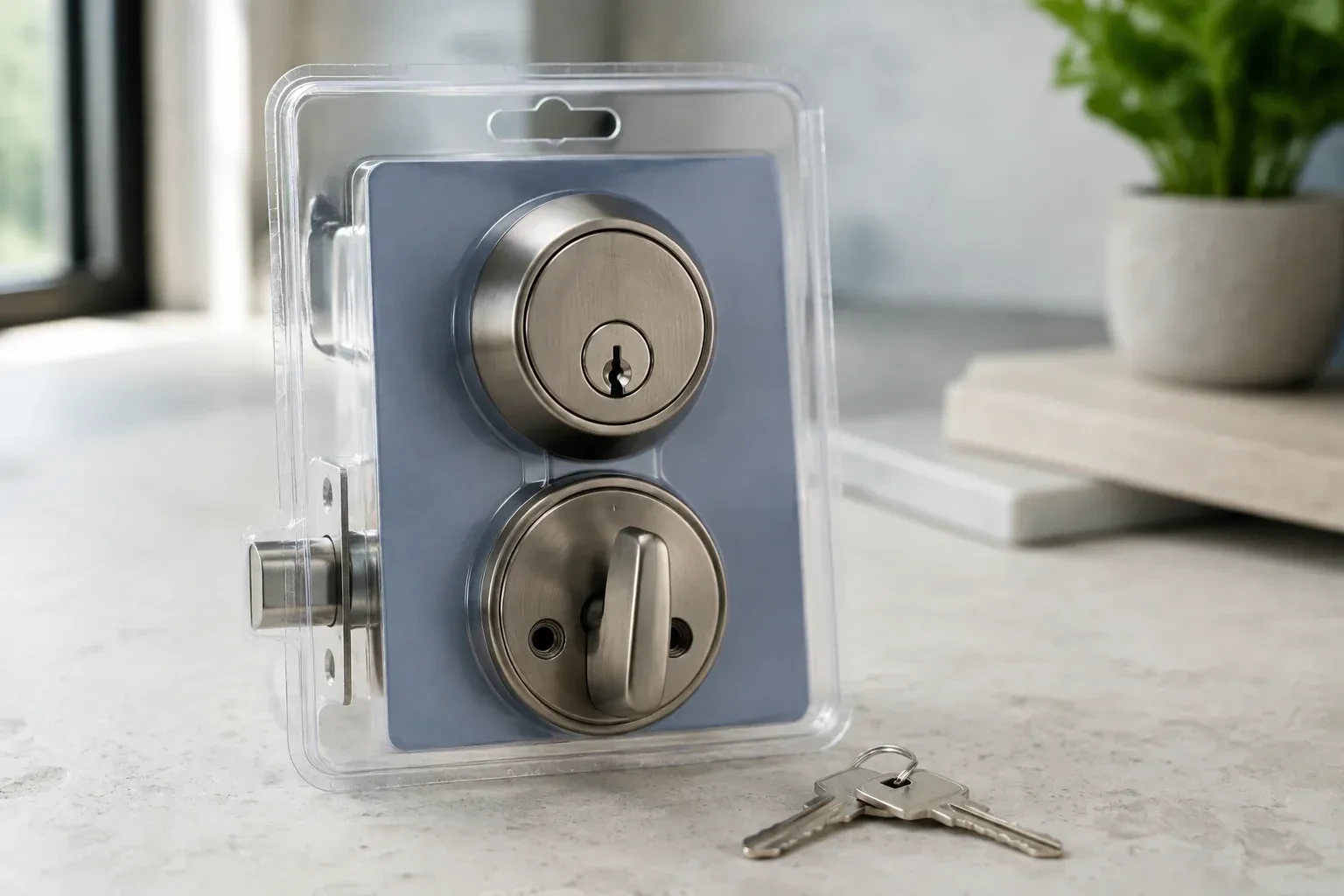
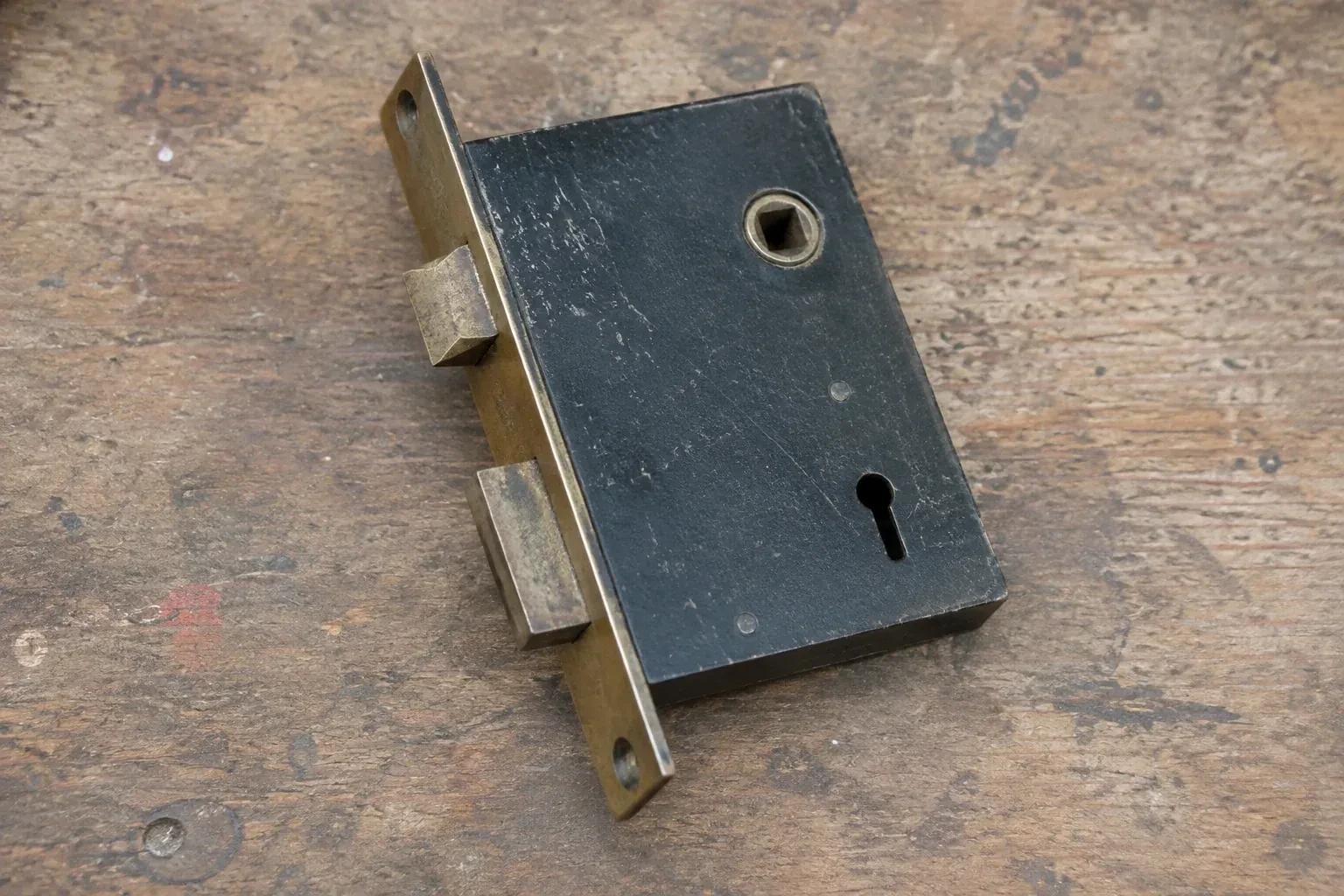
Deadbolt installation puts a solid bolt lock on a door that either has none or has one that is past its useful life. Unlike the spring latch in a knob or lever, a deadbolt is a straight bar of metal that only moves when the key or thumb-turn moves it, so a card slipped into the gap or a shove against the door does nothing. The locksmith bores the door if needed, fits the bolt and cylinder, cuts a proper pocket in the frame and secures a reinforced strike with screws long enough to reach the framing. You are left with a door that locks with a firm, full throw.
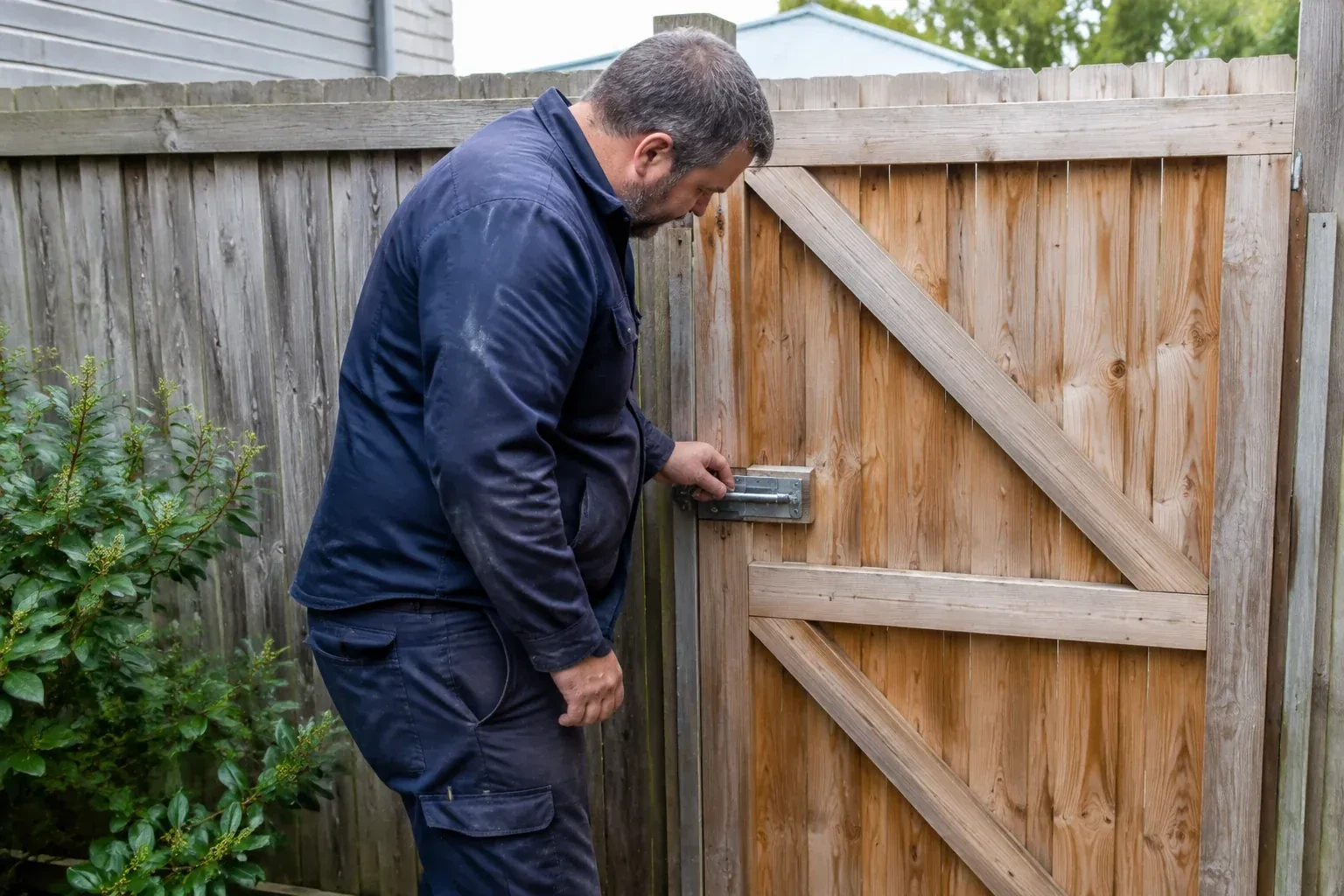
How the visit goesThe back door has a deadbolt in name only: a short bolt, a thin brass strike held by two little screws, and a jamb you can flex with your palm. It was fine for a builder's showing. It is not fine for a laneway.
Deadbolt Installation · Toronto
How the visit goes
- 1
Glass, sidelights and what is within reach
Glass changes the conversation about which deadbolt to fit. A pane in the door or a sidelight within an arm's reach of the lock means an inside thumb-turn could be reached by breaking the glass, which is why double-cylinder deadbolts are sometimes suggested. The locksmith measures the distance from the glass to the lock, notes whether it is tempered, laminated or plain, and lays out the options: a captive thumb-turn that needs a key only when you choose, a laminated pane or a tested security film that can delay an arm, or moving the bolt height. The aim is a door that keeps a stranger out and still lets everyone inside leave with one turn of the hand.
- 2
Marking and boring a fresh door
With the height agreed, the paper template is folded over the door edge and the two centres are marked: the cross bore on the face and the edge bore on the stile. A boring jig clamps over the door so the hole saw cannot wander, and the cross bore is cut from both faces to leave clean veneer or skin on each side. The edge bore is drilled with a 25 mm bit through the stile until it meets the larger hole. The locksmith then traces the bolt faceplate on the edge and chisels a shallow mortise so the plate sits flush, keeping the cut inside the lines so the edge stays sound.
- 3
Ready for a smart lock later
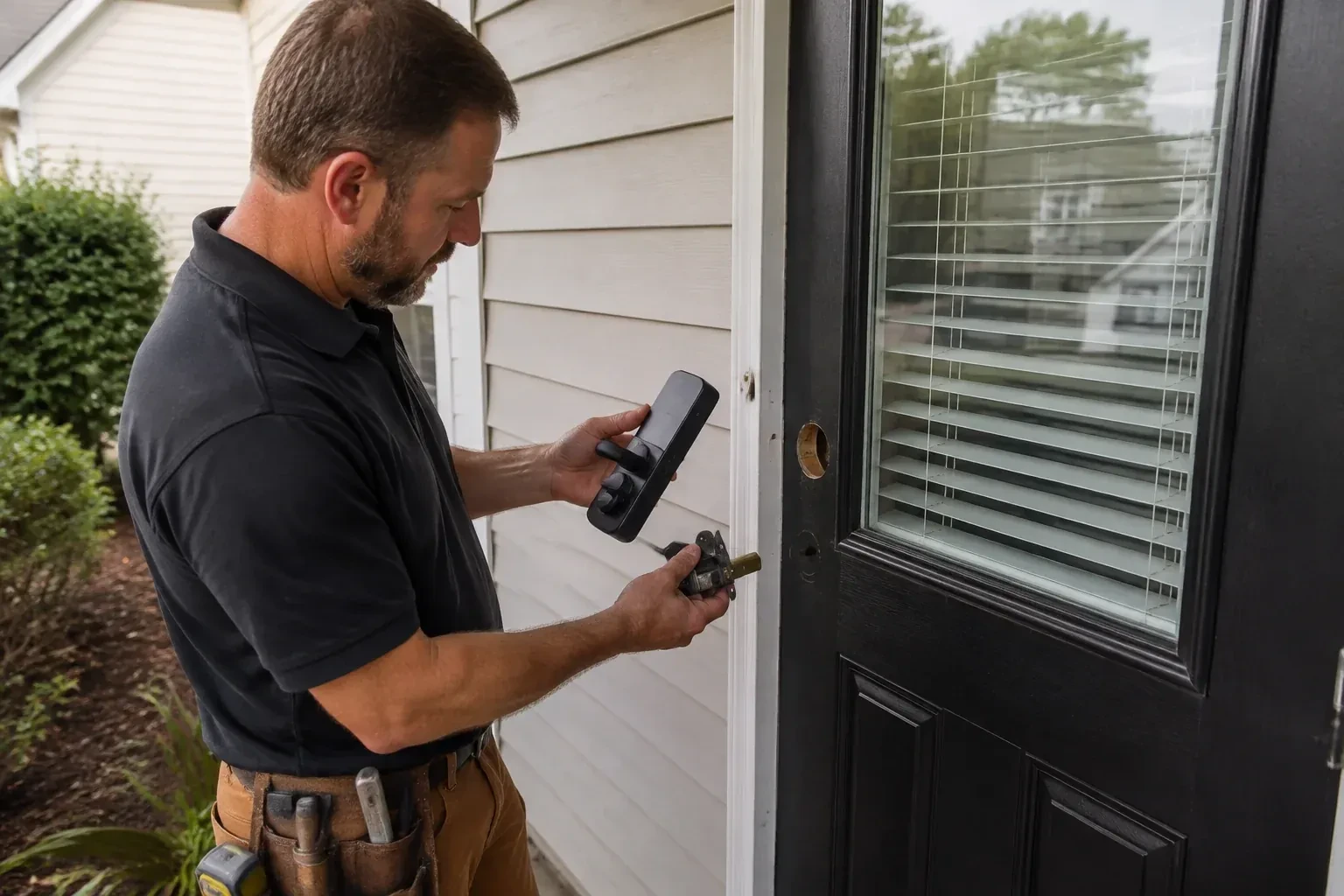
Because the door was prepared to the standard bore and backset, it suits many future options, though the model chosen later still sets its own bore, backset and thickness requirements. Keypad and app-controlled deadbolts fit the same 54 mm cross bore and the same edge bore as the mechanical lock fitted today, so upgrading later means swapping the hardware, not cutting the door again. The backset and bore measurements are written on the packaging left with you. If you want to think about a keypad down the road, ask the locksmith which models suit the door thickness and whether a backup keyed cylinder is worth having for the one day the batteries are flat.
In the van
- 25 mm auger bit
- Boring jig and 54 mm hole saw
- Single-cylinder deadbolt
- Strike box
- 75 mm (3 in) strike screws
What affects the quote
- 1
Door and hinge corrections
A sagging door, loose hinge screws or thick weatherstrip are put right before a bolt is fitted, and that adjustment is quoted as its own line rather than folded into the lock.
- 2
Travel to the property
Distance and access are part of any call-out: a house on a suburban street and a rural property down a long road involve different driving time, and the quote says so.
- 3
Storm door or restricted clearance
A tight storm door, a narrow lock stile or a decorative panel at bolt height can require low-profile trim or a shifted position, which is settled and quoted at the assessment.
Same fees day, night or weekend.
Deadbolt Installation: questions
Why does the strike plate matter so much?
The strike is the metal plate the bolt throws into, and it is where a kicked door usually fails: short screws bite only into the thin jamb board, which splits. A reinforced strike or strike box fastened with 75 mm screws passes through the jamb into the stud behind, so a blow is met by the framing of the house. On a wood frame, strike screws that reach at least 30 mm into solid wood behind the jamb are what actually holds.
Will drilling a new deadbolt damage my steel or fibreglass door?
Not when it is done for that door. Steel-clad doors are cut with a fine-toothed hole saw run slowly through the skin, guided by a jig so the saw cannot skate on the smooth face, and finished from both sides so each skin stays clean. Fibreglass is scored first so the surface does not chip. Shavings are vacuumed from the foam core, and the edge is finished with a collar or plate suited to the stile inside.
Can a deadbolt be added to a door that only has a knob?
Yes, on nearly any wood, steel-clad or fibreglass entry door. The locksmith marks a spot above the knob, clamps a jig to the door and bores a cross hole through the face and a smaller hole through the edge, then cuts a pocket and fits a strike on the frame. The main things checked first are the door's thickness, what is inside it at that height and whether glass sits close by.
Deadbolt Installation near you
Toronto, Ontario
Toronto information
- Town
- Toronto, Ontario
- In business
- 17 years
- Hours
- Open 24/7 · nights, weekends and holidays, same fees
- Phone
- (289) 806-4961
- Visits
- On-site assessment preferred. Request a visit or call.
What the census means at the door
58%
Older homes. About 58% of homes in Toronto were built in 1980 or earlier, according to the 2021 Census.
Established homes often have non-standard bores and backsets from an earlier generation of hardware. A locksmith working in such an area carries adapter plates and cylinders in the older sizes, so an upgrade fits the existing door instead of forcing a new one.
23%
Single-detached houses make up about 23% of homes in Toronto (2021 Census).
Where most people live in townhouses, apartments or condos, doors come in two kinds: the suite door you control and the shared entrances the building manages. A locksmith works on your door freely and coordinates with management on the rest.
Open 24/7
Request a visit
The old deadbolt has grown lazy.
Call now · open 24/7(289) 806-4961- On-site assessment preferred
- Same fees day, night or weekend
- 17 years in business