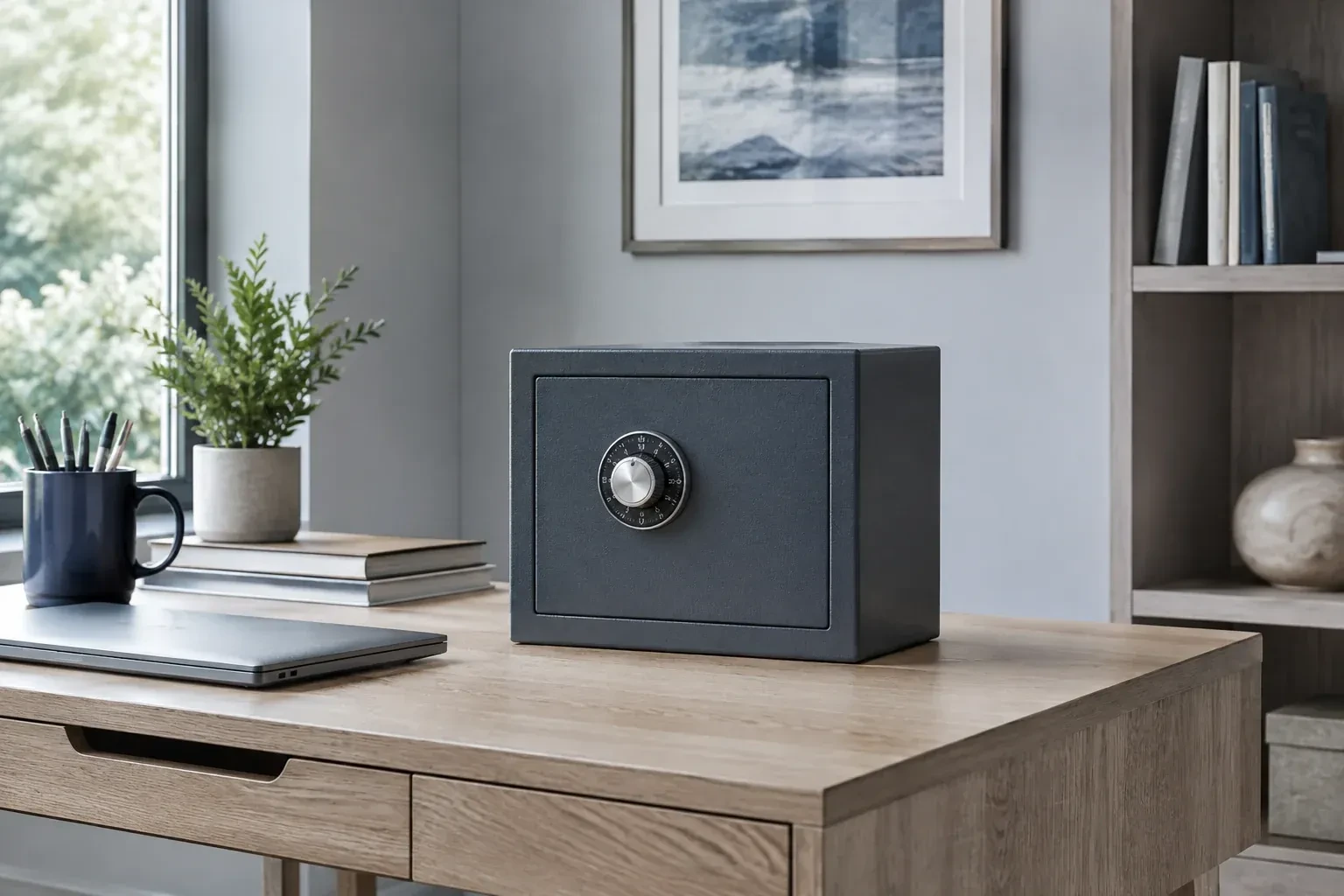
High security · Oakridge
Safe Opening & Combination Change in Oakridge
A software update reset the clinic's small safe overnight, and the receptionist's usual code now does nothing on a keypad that lights up but goes no further.
Call now · open 24/7(289) 806-4961In plain words
Two different problems can look identical from outside a locked safe: a combination that genuinely no longer opens it, and a mechanism that is jammed, corroded or blocked while the correct numbers still work perfectly. Sorting out which one is happening comes before any decision about drilling, since a stuck handle or a tripped relocker needs freeing rather than a fresh combination. Getting this diagnosis right the first time keeps the visit focused on the actual cause rather than the symptom in front of you.
How the visit goesThe new manager took over the shop last month and only now needs the back-office safe open, but the combination the previous owner was supposed to leave in writing never turned up anywhere in the handover file.
Safe Opening & Combination Change · Oakridge
How the visit goes
- 1
Reading the safe before touching it
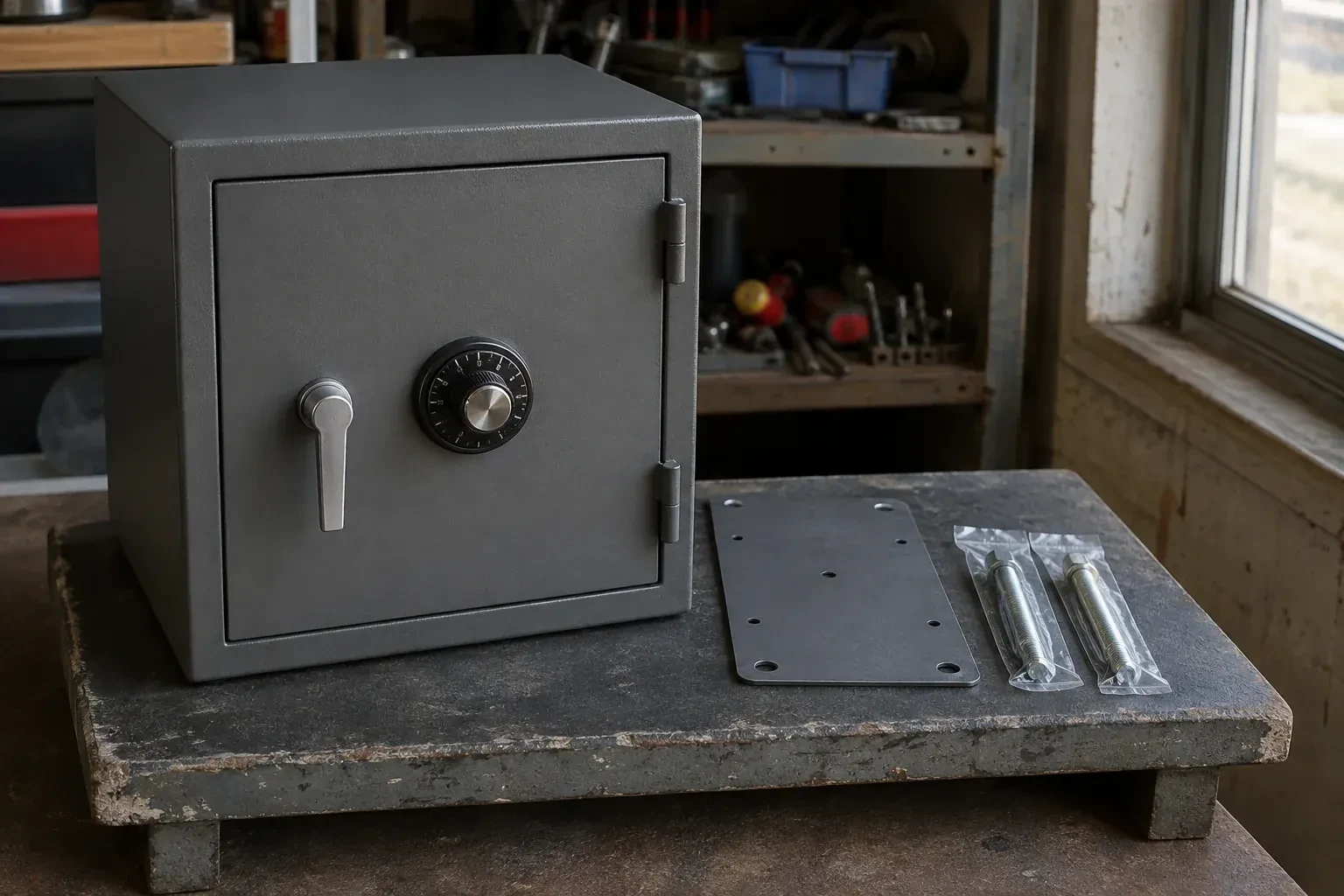
Every safe carries clues about what is inside its lock. A manufacturer's data plate, usually on the door or inside the frame, often names the brand, model and sometimes the lock's own security rating. The dial style, the keypad's shape and buttons, and whether a key cylinder sits alongside the combination lock all narrow down the lock family before a single tool is used. Older safes without a legible plate are identified from the case shape, the handle style and the dial ring instead. Getting this identification right decides which manipulation technique, which reset procedure or which manufacturer tool applies, and it is the difference between a clean opening and a guess.
- 2
Least invasive first, on every safe
Opening a safe is planned around the specific lock, its condition and what recovery options it actually has: manipulation or decoding for a mechanical dial, a manufacturer reset or override path for an electronic keypad where one exists, and drilling where the gentler routes are unavailable or exhausted. This order exists because a safe's lock, dial ring and case finish are the hardest parts to replace cleanly, so any method that leaves them intact is worth the extra time it takes. Working through the ladder in order, rather than jumping to the most direct option, is what keeps the great majority of safes leaving the visit with their original lock still in place.
- 3
A repaired point instead of a hole
If drilling was needed, the hole is closed with a repair plug or patch plate matched to the case material and finish before the visit ends, so the safe's exterior shows a single small, professionally finished repair rather than an open hole. Where the drilled point affected the lock's original security rating, that is explained plainly, along with whether the replacement lock restores it. Restoring the case's original protection at that point follows the safe maker's approved repair method rather than being assumed automatic, since drilling can affect fireboard or barrier material there; the rest of the case, its steel, hinges and fire lining, carries on as it was.
In the van
- Spindle and drive cam
- Manufacturer reset tool
- Drill rig and carbide bits
- Replacement dial and ring
- Repair plug and patch plate
What affects the quote
- 1
Multiple safes or vaults at one site
A property with more than one safe, such as a retail floor safe and a separate office unit, is quoted as a longer visit covering each one in turn.
- 2
Any upgrade chosen during the same visit
Moving to a higher-rated lock, adding a second user code, or fitting an anti-relock plate is optional and priced as its own line whenever an owner chooses it.
- 3
Security rating of the existing lock
A higher-rated lock, such as a UL Group 1 mechanical lock, generally takes longer to manipulate or decode than a basic Group 2 lock, and that time is reflected in the visit.
Same fees day, night or weekend.
Safe Opening & Combination Change: questions
Can a mechanical dial safe be opened without drilling it?
Most of the time, yes. Manipulation reads the wheel pack through the dial by feel, and decoding tools built for a specific lock family read the gate positions directly, both without any lasting effect on the lock. Whether either works depends on the lock's own security rating and condition, since a high-security Group 1 lock resists these methods far longer than an older Group 2 one, but drilling is only used once both routes are ruled out.
Can a safe be repaired instead of replaced after drilling?
Often, yes, particularly for a mechanical lock, where a worn wheel pack, drive cam or spindle can be replaced individually within the existing lock body. An electronic lock's circuit board and keypad are less often repairable in place and are more commonly swapped for a comparable or higher-rated replacement unit that fits the same cutout.
Do you need the safe's model or serial number before you arrive?
It helps but is not required. A data plate on the door or frame, a purchase receipt, or a manual kept in a drawer all speed up identifying the lock family in advance. Where none of that survives, the locksmith identifies the safe from its case shape, dial style and handle once on site, which simply adds a short assessment step at the start of the visit.
High Security Locks
Safe Opening & Combination Change near you
Toronto, Ontario
Oakridge information
- Town
- Oakridge, Toronto, Ontario
- In business
- 17 years
- Hours
- Open 24/7 · nights, weekends and holidays, same fees
- Phone
- (289) 806-4961
- Visits
- On-site assessment preferred. Request a visit or call.
What the census means at the door
58%
Older homes. About 58% of homes in Toronto were built in 1980 or earlier, according to the 2021 Census.
Period hardware on older homes deserves matching parts, not a mismatched modern set. A locksmith who works among such houses keeps finishes and styles that suit them, so a repaired or replaced lock still looks like it belongs to the door.
23%
Single-detached houses make up about 23% of homes in Toronto (2021 Census).
Townhouses share walls but usually have their own front door and often a back door or garage. Keying both alike, and checking the strike on the less-used door, is the everyday work in a neighbourhood of attached homes.
Open 24/7
Request a visit
A software update reset the clinic's small safe overnight, and the receptionist's usual code now does nothing on a keypad that lights up but goes no further.
Call now · open 24/7(289) 806-4961- On-site assessment preferred
- Same fees day, night or weekend
- 17 years in business